
Laboratory Dishwashers and Glassware Washers
Undercounter, freestanding and double-door pass-through glassware washers for research, QC, pharmacy and teaching labs. Tell us the model you have been specified and the utilities you have, and we will price it or propose a like-for-like alternative.

Machine Types
Laboratory glassware washers come in three practical formats. The choice is driven by where the machine has to fit, how much glassware moves through it, and whether clean and dirty glassware have to be kept in separate rooms.
| Type | Suits | What to know |
|---|---|---|
| Undercounter | Teaching labs, pharmacies, small QC labs, bench-space-limited rooms | Fits a standard base cabinet opening; confirm the opening height and the door swing before ordering |
| Freestanding single door | Research and QC labs with steady throughput | Taller chamber takes taller glassware; needs its own footprint and utility rough-in |
| Double-door pass-through | Cleanrooms, compounding pharmacies, barrier washrooms | Loaded one side, unloaded the other; the wall opening and seal have to be coordinated with the room build |
| Pass-through with automatic loading | High-volume production and pharma | Adds loading/unloading automation; specify with the layout, not after it |
Hinged or sliding doors are available across the range. If the machine is going into a room that is still being built, the wall opening and the utility rough-in are the two things to fix early — see cleanroom systems if it sits in a barrier wall.
Sizing and Loads
Machine selection follows the glassware, not the other way round. The questions worth answering before you look at models:
- What are you washing? Beakers and general labware, or narrow-neck items such as volumetric flasks, BOD bottles and digestion tubes that need injection spindles.
- How tall is the tallest item? This sets the chamber height and often rules out undercounter machines on its own.
- How many loads per day? Throughput decides between undercounter and freestanding more often than budget does.
- Any specialty item counts and dimensions? Tube diameter and length matter: a 100 ml digestion tube load needs a specific insert, and it is cheaper to specify it with the machine than to add it later.
- Does anything need drying? Hot-air drying is a configuration choice, and it affects cycle time and utilities.

Utilities and Site Requirements
This is where glassware washer projects go wrong, and it is entirely avoidable. Confirm these before the order, not at delivery.
| Utility | What to confirm | Why |
|---|---|---|
| Electrical voltage and phase | The exact voltage and whether single or three phase is available | Machines are built for a supply and are not field-convertible; this is the most common late surprise |
| Cold water | Connection point and pressure | Standard supply for wash phases |
| Hot water | Availability | Shortens cycle time where available; some installs run cold-fill only |
| Deionized / purified water | Whether a DI loop reaches the machine | Needed for a spot-free final rinse on analytical glassware; a pre-heat tank is an option on some models |
| Drain | Location, height and temperature rating | Hot drain water needs a rated connection |
| Detergent dosing | How many liquid detergents you need dosed | Up to four dosing pumps are available; decide with the chemistry, not afterwards |
| Opening and clearances | Cabinet opening or floor footprint, plus door swing | Undercounter units must clear the cabinet run and the bench overhang |
Water management between phases
On a laboratory machine the water is drained between each phase of the cycle and fresh water is introduced for the next one, rather than being recirculated through the whole cycle. That is central to why a lab washer produces analytically clean glassware and a domestic machine does not.
Brands and Substitutions
We quote glassware washers from the major laboratory manufacturers, including Labconco, Steelco and Miele units. A large share of the enquiries we get are not “which brand is best” but “we have been specified this model, can you offer an equivalent” — usually on price or on lead time.
The answer depends on four things, and we will give it to you straight rather than quoting a lookalike:
- Chamber size and usable load height against the specified unit.
- Rack, insert and injection-spindle compatibility with your actual glassware.
- Cycle documentation and control features, where a validated or documented cycle is part of the requirement.
- Utility match, especially electrical phase and voltage and whether DI water is plumbed to the machine.
If an alternative matches on all four we will say so and price it. If it does not, we will tell you which point it fails on, because a substitution that cannot take your rack package is not a saving.
Racks, Inserts and Injection Carts
The rack package is what makes a washer fit your lab, and it is routinely underestimated in budgets. Wash carts, baskets, inserts and trays are available in standard and configurable arrangements across the range, and injection carts couple directly to the machine so water is driven inside narrow-neck glassware rather than only over the outside of it.

What to tell us so the rack package is right first time
- The glassware types and rough quantities per load.
- Dimensions of any specialty item, including tube diameter and length.
- Whether items are narrow-neck and therefore need injection spindles.
- Whether you want a second rack so one can be loaded while one is washing.
Construction and Cleaning Performance
Cleaning performance comes from mechanical action: flow rate and spray pressure with complete coverage of the load. Pumps and circuits are matched to each chamber size for that reason, which is also why a rack that blocks spray coverage undoes an otherwise well-specified machine.
Materials that matter on a spec sheet
- Chamber, spray arms and tank filters in AISI 316L stainless steel (DIN 1.4404) on the machines we typically quote — the grade that tolerates laboratory detergents and chlorides.
- External cabinet in AISI 304 stainless steel (DIN 1.4301).
- Rounded chamber edges, so there are no dirt traps where microbial growth can start.
- Multi-level water filtration, which protects the pump and keeps debris off the load.
- Double-wall construction and chamber insulation, which cut noise and heat loss in the room.
Controls and documentation
Laboratory controls display cycle status and alarms, self-diagnose faults, and let an operator select and document the right program per load. If your quality system needs cycle records, say so up front: it changes which control package you should be quoting.

Pricing and Lead Time
We quote the machine and the rack package together, because quoting the machine alone produces a number nobody can actually buy at. To price your washer we need:
- The model you have been specified, if there is one.
- The format you need: undercounter, freestanding or pass-through.
- What you are washing, including any specialty glassware dimensions.
- The electrical supply available (voltage and phase) and whether DI water is plumbed to the point of use.
- Whether drying is required.
- Your site date, and whether this is going through a reseller or a public solicitation.
Glassware washers are equipment rather than stock furniture, so build and delivery time is a real input into a construction schedule. If you are coordinating with a room that is still being built, tell us the site date at quote stage and we will tell you whether it is achievable.
Videos
Two manufacturer videos worth watching before you specify: an overview of washing glassware in a laboratory machine, and a walk-through of programming a glassware washer.
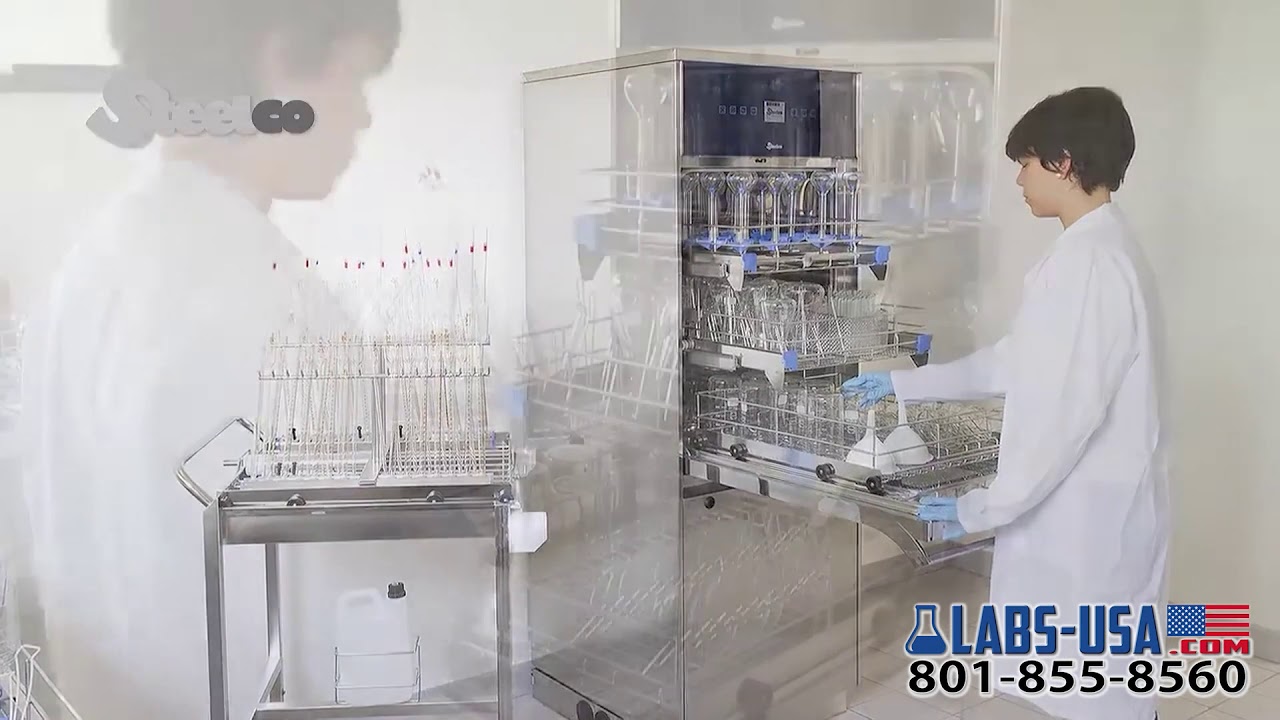
Washing laboratory glassware
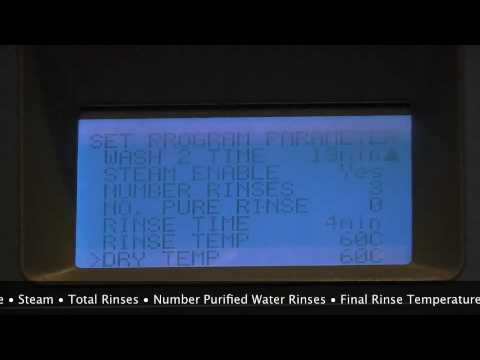
Programming a glassware washer — manufacturer setup guide
Manufacturer resource: Explore Labs USA laboratory dishwasher solutions.
Frequently Asked Questions
How much does a laboratory dishwasher cost?
Undercounter glassware washers are the entry point, freestanding single-door units sit in the middle, and double-door pass-through machines with automatic loading are the top of the range. Racks, inserts and injection carts are a real part of the cost rather than an afterthought, because they are what make the machine fit your glassware. Send us the model or the load you need to clean and we will quote the machine and the rack package together, so the number you get is the number you can buy at.
What is the difference between a lab dishwasher and a domestic one?
A laboratory glassware washer is built for a different job: a stainless steel chamber that tolerates detergents and heat, programmable cycles with documented parameters, multiple water connections including deionized water for the final rinse, detergent dosing pumps, and racks with injection spindles that drive water inside narrow-neck glassware. A domestic machine cannot rinse with DI water, cannot reach inside a volumetric flask and does not document a cycle. For any analytical work the difference shows up in your results, not just in the specification.
Undercounter or freestanding?
Undercounter where bench space is the constraint and the volume is moderate, and it is the usual answer in teaching labs, pharmacies and small QC labs. Freestanding where throughput is higher or the load is tall. A double-door pass-through is for a barrier situation, where dirty glassware is loaded on one side and clean glassware is taken out in a separate room, which is the arrangement cleanrooms and pharmacy compounding suites usually need.
What electrical supply does a lab glassware washer need?
It varies by model and it is the single most common late surprise, so settle it before ordering. Machines are commonly available in single phase or three phase, at different voltages, and a unit specified for one supply is not field-convertible to another. Tell us the voltage and phase available at the location and we will confirm the machine is built for it, along with the hot, cold and DI water connections and the drain requirement.
Can you supply an alternative brand to the one in my specification?
Usually yes. We are regularly asked whether an equivalent can be offered against a specified unit, and the honest answer depends on what the specification actually relies on: chamber size, rack and insert compatibility, cycle documentation and the utility connections. Send us the specified model and we will tell you plainly whether an alternative matches it on those points or whether it does not, rather than quoting something that looks similar on paper.
Can it wash narrow-neck and specialty glassware?
That is what injection racks are for. Spindles inside the rack push water and rinse directly into narrow-neck items such as volumetric flasks, BOD bottles and digestion tubes, which is the only reliable way to clean the inside of them. Specialty loads are worth describing to us item by item, including tube diameter and length, because the rack and insert selection follows from the glassware rather than the machine model.
Do you supply washers for schools and teaching labs?
Yes, and it is a frequent question from architects and facilities staff who do not specify this equipment often. For a high school or community college biology or chemistry lab, a basic undercounter washer with a general-purpose rack is normally the right answer, and the budget is better spent on the rack package than on cycle features that a teaching lab will never program.
Can you quote through a federal reseller or on a government project?
Yes. We quote glassware washers through resellers and on federal and state projects regularly, and we can provide the quote in the format the solicitation asks for. See our government lab furniture page for how we handle procurement paperwork, vendor setup and fiscal-year timing.
Related Laboratory Equipment and Furniture


Need a glassware washer priced?
Send us the specified model or just tell us what you need to wash and what utilities you have. We will quote the machine and the rack package together.