

Lab Fume Extraction Arm: A Guide to Source Capture Safety
A lab fume extraction arm, also known as an exhaust snorkel, is a vital tool for laboratory safety. It is an articulated arm that works like a focused vacuum cleaner, positioned directly over a workspace. This method, called source capture, is designed to remove hazardous fumes, chemical vapors, and dust right where they are created. This prevents them from entering your breathing zone or spreading throughout the laboratory.
This direct approach is more effective than relying on general room ventilation to dilute airborne contaminants. A lab fume extraction arm actively removes hazards from the air, ensuring a safer work environment for all personnel.
Your Quick Guide to Fume Extraction Arms
- What are they? Articulating arms that capture harmful fumes, dust, and vapors directly at the source before they can spread.
- Why are they important? They significantly improve lab safety, protect personnel from inhaling hazardous substances, and help maintain air quality.
- What are the main types?
- Original: For general purposes like solvents and light dust. Made of anodized aluminum.
- ESD (Electrostatic Discharge): For electronics labs to prevent static damage.
- Chemical Resistant: For corrosive chemicals like strong acids. Made of polypropylene.
- How to choose? Match the arm’s material to the specific contaminants you work with. Consider reach, mounting style, and airflow needs.
Why Your Lab Needs a Fume Extraction Arm
A lab fume extraction arm is a key piece of safety equipment. It moves beyond simply diluting airborne hazards and actively removes them from your workspace. While a general HVAC system circulates air, an articulating fume arm pulls contaminants out of the equation completely. This is critical for protecting your team and preventing cross contamination of sensitive samples.
By capturing fumes the moment they are created, these systems are essential for meeting workplace safety standards like those from OSHA. The goal is to create a cleaner, safer, and more controlled environment. Targeted extraction is a powerful tool for achieving this.
The practical benefits of adding an exhaust snorkel are clear:
- Enhanced Personnel Safety: Drastically reduces the inhalation of harmful substances.
- Improved Air Quality: Keeps the entire laboratory environment cleaner.
- Sample Integrity: Stops airborne particles from compromising experiments.
- Regulatory Compliance: Helps satisfy health and safety requirements.
Comparing the Three Types of Fume Extraction Arms
Not all laboratory work is the same, and neither are fume extraction arms. Using a one size fits all approach does not work when dealing with different chemicals, dusts, and sensitive equipment. Choosing the right laboratory exhaust snorkel means matching the tool to the task. Each type is built from specific materials to handle distinct hazards safely.

To make your choice easier, we will break down the three main models available. Think of this as your guide for identifying which articulating fume extraction arm is the perfect fit for your work.
Fume Extraction Arm Model Comparison
Here is a side by side look at the key features of the Original, ESD, and Chemical Resistant fume extraction arms. This table should help you select the ideal model for your laboratory’s needs.
| Feature | Original Exhaust Snorkel | ESD Exhaust Snorkel | Chemical Resistant Exhaust Snorkel |
|---|---|---|---|
| Primary Material | Anodized Aluminum | Anodized Aluminum | Polypropylene |
| Key Feature | General purpose, cost effective | Conductive for static safety | High resistance to corrosives |
| Common Uses | Solvents, dust, light fumes | Soldering, electronics assembly | Strong acids, aggressive vapors |
| Best For Labs | Education, general chemistry | Cleanrooms, electronics repair | Pharmaceutical, R&D, chemical |
As you can see, the core differences are clear. For common applications like venting solvent vapors or light dust, the anodized aluminum construction of the Original Exhaust Snorkel is a reliable and budget friendly choice. It works well for many general chemistry and educational labs.
However, when your protocols involve aggressive chemicals like strong acids, you need polypropylene. The Chemical Resistant Exhaust Snorkel is built to handle these harsh conditions without breaking down. For any environment where a static spark could destroy expensive components, the ESD Exhaust Snorkel is essential. It provides a critical layer of conductive protection.
Our Lab Fume Extraction Arm Products
Ready to find the right fume extraction arm for your lab? We offer three distinct models to meet specific safety and application needs. Each one is built for performance and durability. Find your perfect match below.
Original Exhaust Snorkel
The dependable workhorse for general lab use. Made from anodized aluminum, it’s perfect for capturing solvents, light dust, and common chemical fumes in educational and industrial settings.
Buy Original Exhaust Snorkel Now
ESD Exhaust Snorkel
Essential for electronics labs and cleanrooms. This arm is constructed with materials that safely dissipate static buildup, protecting sensitive components from electrostatic discharge while capturing soldering fumes.
Chemical Resistant Exhaust Snorkel
Engineered for the toughest jobs. Made from durable polypropylene, this arm withstands highly corrosive acids and aggressive vapors, making it the only safe choice for pharmaceutical and advanced chemical research labs.
Buy Chemical Resistant Exhaust Snorkel Now
How to Choose the Right Fume Extraction Arm
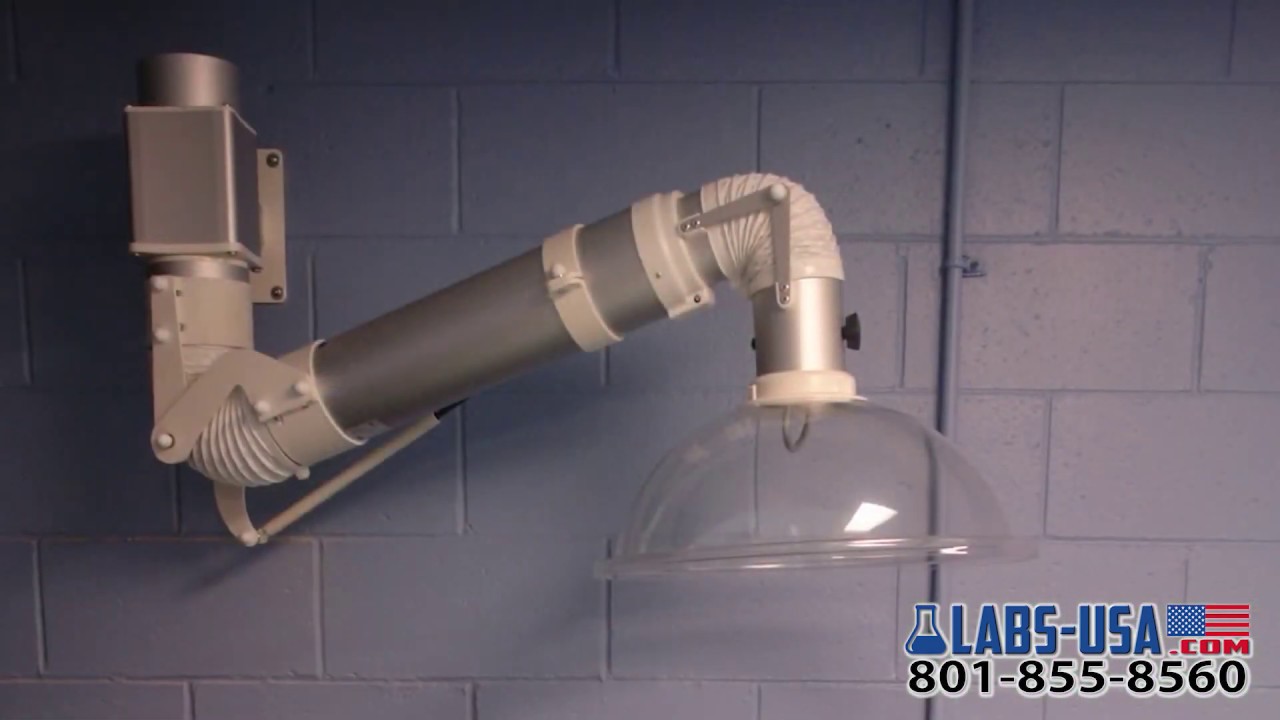
Picking the perfect lab fume extraction arm does not have to be complicated. When you have a clear plan, the process is straightforward. Making the right choice from the start ensures your equipment performs safely and meets the demands of your specific tasks. We have put together a simple five step checklist to guide you.
5-Step Checklist for Selecting Your Fume Arm
- Identify Your Contaminants: First, list every chemical, vapor, or dust particle you need to capture. This is the most important step. Always consult your Safety Data Sheets (SDS) to understand the hazards and check for material compatibility.
- Determine Reach and Mounting: Measure your workspace. You need to know the length and articulation required to cover all work areas without being an obstacle. This is also when you will decide if a bench, ceiling, or wall mounted model makes the most sense for your lab’s layout.
- Verify Material Compatibility: Refer to your contaminant list from Step 1. This list dictates the arm material you need. For general solvents, an aluminum Original Exhaust Snorkel is a solid choice. For strong acids, you will need a polypropylene Chemical Resistant Exhaust Snorkel. For delicate electronics, an ESD Exhaust Snorkel is necessary to prevent static discharge.
- Confirm Airflow Requirements: Ensure the arm’s diameter and your building’s ventilation system can generate the necessary capture velocity. This is the air speed at the source needed to pull contaminants into the arm. Check your system’s CFM (cubic feet per minute) capacity to confirm it is adequate.
- Review Hood and Accessory Options: The final step is choosing a hood style that fits your application. Different jobs call for different capture patterns, with options like dome, flat, or slotted hoods. Also consider extras like dampers for airflow control or integrated lighting.
Use Cases: Which Fume Arm Fits Your Lab?
To see how this works in the real world, let’s walk through a few common lab environments and see which benchtop extraction arm for sale makes the most sense. These examples should help you visualize what your own space requires.
Scenario 1: University Chemistry Lab
A typical university chemistry lab involves students working with mild solvents and general chemical reagents. The main task is to pull common fumes away from their workspace during routine experiments. For this setting, the Original Exhaust Snorkel is the go to choice. Its aluminum body is durable enough for daily use and cost effective for outfitting multiple workstations.
Scenario 2: Electronics Assembly and Soldering Station
In a cleanroom or on an electronics repair bench, the biggest invisible threat is electrostatic discharge. A small spark can destroy sensitive microchips. The ESD Exhaust Snorkel is non negotiable here. It is built to dissipate static electricity safely, protecting valuable components while removing harmful soldering fumes.
Scenario 3: Pharmaceutical R&D Lab
Labs in the pharmaceutical or high purity chemical sectors often handle aggressive and corrosive substances like strong acids. The Chemical Resistant Exhaust Snorkel is essential for these environments. It is made of polypropylene, a material designed to withstand harsh chemical exposure without breaking down. This is the safest option for personnel working with potent, hazardous materials.
Scenario 4: Art Restoration Studio
An art restoration studio may use various solvents to clean paintings or artifacts. These solvents can release volatile organic compounds (VOCs). The Original Exhaust Snorkel is ideal here. It can be precisely positioned over the work area to capture vapors at the source, protecting the conservator’s health without obstructing their detailed work.
Scenario 5: Dental Lab
Dental laboratories handle materials that create fine dusts and chemical fumes from acrylics and bonding agents. A Chemical Resistant Exhaust Snorkel is often the best choice due to the variety of chemicals used. It effectively removes these airborne particles, ensuring a clean and safe environment for technicians.
Frequently Asked Questions (FAQs)
Lab managers and safety officers often ask us questions when choosing a fume arm supplier. Here are answers to the most common inquiries.
What is the difference between a fume arm and a fume hood?
A fume hood is a large, enclosed cabinet that creates a fully ventilated workspace for hazardous materials. A fume arm is a smaller, flexible device for source capture. It gets right to the point of generation, like a beaker or soldering station, and pulls contaminants away before they escape. This makes it ideal for smaller tasks where a full hood is not practical.
How far can a fume extraction arm reach?
Most articulating arms have a reach between 3 and 10 feet. The key is to match the arm to your workspace. Before you buy, measure the area you need to cover on your workbench to ensure the arm you choose can be positioned correctly.
Why is capture velocity important?
Capture velocity is the minimum air speed needed at the arm’s opening to grab fumes and pull them into the system. If the velocity is too low, contaminants can escape into the lab. Correct capture velocity is critical for safety and air quality.
Can I connect a fume arm to my existing ventilation system?
Yes, in most cases. A benchtop extraction arm can often be tied into an existing HVAC or dedicated exhaust system. However, you must consult a ventilation specialist first. They need to confirm your system can handle the extra airflow demand without affecting other vented equipment.
How often should I inspect my fume extraction arm?
Regular inspections are crucial for performance and safety. We recommend monthly checks of the joints, hoses, and airflow. A quick visual inspection before each use is also a good practice. Always follow the manufacturer’s maintenance guidelines and your facility’s safety protocols.
What are the mounting options for these arms?
Fume extraction arms are versatile and can be mounted in several ways. Common options include bench mounting, wall mounting, and ceiling mounting. The best option depends on your lab’s layout, the location of the work, and the need to keep the bench clear.
Are replacement parts available?
Yes, replacement parts such as hoods, hoses, and joints are available. Using genuine replacement parts ensures your system continues to operate safely and effectively. Contact your fume arm supplier for information on ordering the correct parts for your model.
Get the Right Fume Extraction Arm for Your Lab
Choosing the correct lab fume extraction arm is a critical step in creating a safe and efficient laboratory. By identifying the specific contaminants in your workspace and matching them with the right material, whether it is anodized aluminum, ESD safe aluminum, or chemical resistant polypropylene, you ensure optimal protection for your team.
At Labs-USA, we are experts in laboratory equipment and are committed to helping you find the perfect solution. We offer competitive pricing, the fastest shipping in the industry, and free layout designs with no obligation.
Ready to improve your lab’s air quality and safety?
Compare Our Fume Extraction Arms
Request a Free Quote Today or call us at (801) 855-8560 for expert advice.