

Biological safety cabinets, often called BSCs, are highly specialized containment workstations designed to protect lab personnel, the delicate samples being worked on, and the surrounding environment from hazardous biological materials. They are categorized into three main biological safety cabinet types: Class I, Class II, and Class III, with each class offering a progressively higher level of containment for different risk scenarios.
Unpacking the Role of Biological Safety Cabinets

It’s best to think of a BSC not just as a piece of lab furniture, but as an advanced containment shield. It relies on a meticulously engineered airflow system to forge an invisible barrier between the scientist and any potentially harmful microorganisms. This is a world away from a standard chemical fume hood, which just pulls air away from the user without filtering it to protect the sample inside.
A BSC’s real magic lies in how it manages airborne contaminants. It uses a combination of inward airflow to protect the person working and a HEPA-filtered downflow to keep the product sterile. This two-pronged approach is essential for maintaining a clean work area while simultaneously stopping hazardous aerosols from escaping into the lab.
The Three Pillars of Protection
Every single BSC is engineered around three non-negotiable protection goals. Getting a handle on these pillars is the first step to choosing the right cabinet for your lab’s specific needs:
-
Personnel Protection: This is all about keeping the researcher safe from exposure to the biohazardous agents inside the cabinet. It’s accomplished by pulling room air into the front of the cabinet, creating a curtain that keeps contaminants away from the user.
-
Product Protection: This pillar focuses on stopping airborne contaminants from the lab from getting into the work area and ruining samples, cell cultures, or other sterile materials.
-
Environmental Protection: Finally, this ensures that any contaminated air from inside the cabinet is thoroughly cleaned by high-efficiency particulate air (HEPA) filters before it’s exhausted back into the room or vented outside.
A Critical Tool for Modern Labs
You really can’t overstate the importance of these devices. Globally, biological safety cabinets are the bedrock of safely handling hazardous materials. In fact, over 70% of laboratories depend on them to maintain biosafety. That growing reliance is reflected in the market, which stood at USD 189 million in 2024 and is forecast to climb to nearly USD 387 million by 2033.
The primary purpose of a BSC is to act as the main containment tool for working safely with infectious microorganisms. Its design creates a tightly controlled environment where precise airflow isolates and captures particles that could pose a danger.
How you organize the space around a BSC is also critical to its performance. Storing supplies on a sturdy, easy-to-reach wire shelf helps keep airflow paths clear and minimizes clutter that could disrupt the cabinet’s protective air curtain. Next, we'll dive into the specifics of each class—I, II, and III—and see how their unique designs map to different biosafety levels and lab duties.
Decoding Class I and Class II Cabinets

When you step into the world of biological safety cabinets, you’ll find that Class I and Class II models are the ones you'll see most often. They are the backbone of countless labs, handling everything from basic research to diagnostics and production. While they both aim for containment, they get there in very different ways.
Getting these differences right is about more than just checking a compliance box. It’s about making sure your lab is set up for success with the best possible safety and workflow. Let’s break down how each of these cabinets works, starting with the original workhorse, the Class I.
Class I: The Original Guardian
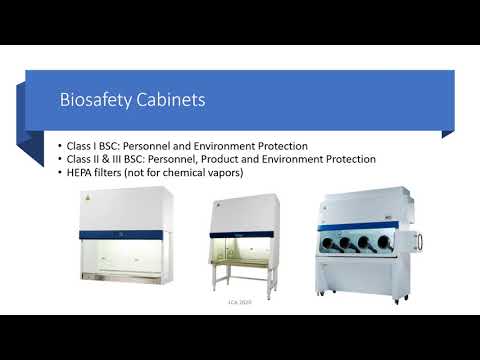
Think of a Class I biological safety cabinet as the original guardian of lab personnel. Its design is straightforward but highly effective, focusing entirely on protecting you and the surrounding lab environment from whatever is inside the cabinet. It does this by pulling a continuous stream of room air into the cabinet, away from the operator.
This constant inward flow of air, called inflow, creates an invisible but powerful barrier. It makes sure any aerosols or tiny particles kicked up during your work are immediately sucked into the cabinet’s filtration system before they have a chance to escape.
But there’s an important tradeoff. Because unfiltered room air is flowing directly over your work surface, the Class I cabinet provides zero product protection. This means it’s a no-go for sensitive applications like cell culture or preparing sterile compounds, where keeping your samples pristine is paramount.
It's best used for:
-
Housing specific equipment like centrifuges or fermenters.
-
Procedures that generate aerosols but don't require product sterility.
-
General containment of low- to moderate-risk biological materials.
Class II: The Triple-Duty Workhorse
The Class II cabinet is where things get more sophisticated, evolving to deliver all three kinds of protection: personnel, product, and environmental. This incredible versatility is exactly why it’s the most common type of BSC you'll find in labs all over the globe.
So how does it do it all? Through a clever combination of protective inflow and HEPA-filtered downflow.
Picture an invisible, sterile air shower constantly washing down over your work area—that’s the downflow. At the same time, room air is pulled into the front grille, creating that protective inflow curtain just like in a Class I. This dual-airflow system keeps the user safe from aerosols, the product safe from contamination, and the exhausted air clean.
This all-in-one protection makes Class II cabinets essential. They are so dominant, in fact, that they command over 40% of the global market share. Their ability to safeguard the user, the experiment, and the lab makes them a fixture everywhere from basic research labs to major pharmaceutical facilities. You can dig deeper into the market data for these vital lab tools on MarketsandMarkets.com.
Because of their more complex design, Class II cabinets are broken down into several subtypes, each with a unique way of managing airflow.
Diving into Class II Subtypes
The key difference between Class II subtypes comes down to how they handle air—specifically, the ratio of air that gets recirculated inside the cabinet versus the amount that gets exhausted. Let's walk through the most common types you’ll encounter.
The table below gives a quick overview of the main players in the Class II family. We'll break down the specifics of each one right after.
Class II Biological Safety Cabinet Subtype Comparison
| Subtype | Air Recirculation | Exhaust Method | Best For |
|---|---|---|---|
| Type A2 | Recirculates ~70% | HEPA-filtered exhaust into the room (can be thimble-ducted) | Most common BSL-1, BSL-2, and BSL-3 applications; minute amounts of volatile chemicals with proper exhaust. |
| Type B1 | Recirculates ~30% | Hard-ducted exhaust to the outside (~70%) | BSL-2 or BSL-3 work with trace amounts of volatile toxic chemicals or radionuclides. |
| Type B2 | Recirculates 0% | Hard-ducted total exhaust (100%) to the outside | Work with significant amounts of volatile toxic chemicals and radionuclides where recirculation is dangerous. |
As you can see, the choice really boils down to whether your work involves volatile chemicals and, if so, how much.
Class II, Type A2
The Type A2 is the undisputed champion of versatility and the most widely used BSC in clinical and research labs. It typically recirculates about 70% of the HEPA-filtered air back over the work surface (the downflow) and exhausts the remaining 30% back into the lab through another HEPA filter.
Because it can be ducted to the outside via a thimble connection, the Type A2 cabinet is suitable for work with minute quantities of volatile chemicals if properly exhausted. This flexibility makes it an ideal choice for a wide range of BSL-2 applications.
Class II, Type B1
The Type B1 cabinet strikes a different balance. It exhausts a much higher percentage of air—around 70%—and recirculates only 30%. Crucially, the exhausted air is hard-ducted directly to the outside of the building. This makes it a better option when you're working with trace amounts of toxic chemicals or radionuclides alongside your biological agents.
Class II, Type B2
For maximum chemical safety in a BSC, the Type B2 is the gold standard. It’s a total exhaust cabinet, which means 100% of the air is HEPA-filtered and ducted outside the lab; absolutely none of it is recirculated. This design prevents any buildup of chemical vapors inside the cabinet and the lab, making it essential for any procedure that involves significant amounts of volatile toxic chemicals.
Class III Cabinets for Maximum Containment

When you're dealing with the world's most dangerous pathogens, there's absolutely no room for error. This is the world of the Class III biological safety cabinet, the peak of personnel, product, and environmental protection. These aren't just cabinets; they are fully sealed, gas-tight containment systems.
Think of a Class III BSC as a high-tech isolation chamber or a "laboratory in a box." Its most defining feature is the absolute physical barrier it creates between the scientist and the hazardous materials. All manipulations happen through heavy-duty, arm-length rubber gloves built right into the cabinet's view screen.
This setup completely eliminates any chance of direct contact. It’s the ultimate expression of containment, reserved for work that carries the highest possible risk.
Advanced Filtration and Negative Pressure
The integrity of a Class III cabinet is locked down by a sophisticated airflow system. Unlike any other BSC, supply air enters through one HEPA filter, but the exhaust air is scrubbed by two HEPA filters in series before it's ever released outside. That double-filtration system creates critical, redundant safety.
On top of that, the entire cabinet is kept under significant negative pressure—at least 0.5 inches of water gauge—compared to the lab around it. This means that even if a leak were to somehow occur, air would rush into the cabinet, not out, preventing any hazardous aerosols from escaping.
A Class III cabinet is essentially a primary containment enclosure designed to be completely gas-tight. All materials are transferred into and out of the work area through a pass-through box that can be decontaminated, maintaining the sterile and contained environment at all times.
Reserved for Biosafety Level 4 Pathogens
Because of their uncompromising design, Class III cabinets are the exclusive tool for work with Biosafety Level 4 (BSL-4) agents. We're talking about dangerous and exotic pathogens that pose a high risk of aerosol-transmitted infections, are often fatal, and frequently have no available treatments or vaccines.
BSL-4 agents include some of the most infamous viruses known to science:
-
Ebola virus
-
Marburg virus
-
Lassa fever virus
-
Various hemorrhagic fever viruses
These cabinets are the cornerstones of high-containment labs focused on public health, biodefense, and emerging infectious diseases. The need for these facilities is undeniable; the global count of high-containment labs that rely on Class III BSCs or similar systems now tops 10,000. You can dive deeper into the growing demand and market dynamics in the full biological safety cabinets market report.
Working in a Class III cabinet requires incredibly strict protocols and serious training. Every single step, from introducing samples to disposing of waste, is meticulously planned to maintain absolute containment and protect researchers and the public from the most formidable biological threats.
Matching Cabinet Types to Biosafety Levels
Picking the right biological safety cabinet isn't just a matter of checking a box—it's the single most important decision you'll make for the safety and compliance of your lab. It all comes down to aligning your cabinet's capabilities with the risk level of the biological agents you're working with. This is where Biosafety Levels (BSLs) come into play.
Think of BSLs as a four-tiered system of containment, with each level building on the last. BSL-1 is for the microbes we understand well and that pose little risk, while BSL-4 is reserved for the world's most dangerous pathogens. Getting this match right isn't just a good idea; it's a non-negotiable rule in any lab.
This is especially true for the biggest players in the field, like pharmaceutical and biopharma companies. They make up over 40% of the market share and rely on these advanced containment systems to protect their people and their groundbreaking research. You can learn more about the market forces driving demand for these advanced containment solutions.
Biosafety Level 1: The Foundation of Safety
Biosafety Level 1 (BSL-1) is where it all starts. This level is for work with well-known agents that aren't known to cause disease in healthy adults—think non-pathogenic strains of E. coli or even chickenpox. The risk to lab staff and the environment is minimal.
Lab practices here are pretty basic, focusing on fundamentals like handwashing and wearing standard personal protective equipment (PPE).
For most BSL-1 work, you don't even need a BSC. Procedures can often be done safely on an open bench. But if there's any chance of creating aerosols, it’s a good practice to use a Class I or Class II cabinet for an extra layer of safety.
Biosafety Level 2: The Standard for Moderate Risk
Biosafety Level 2 (BSL-2) raises the bar for agents that pose a moderate hazard. We're talking about pathogens often linked to human diseases, like Hepatitis B, HIV, and various staph infections.
Here, the primary risks are accidental needlesticks, ingestion, or contact with mucous membranes. Because the risk is higher, lab access is more restricted, and everyone inside needs to wear enhanced PPE.
When it comes to BSL-2 work, there's a hard and fast rule: any procedure that could create infectious aerosols or splashes must be done in a Class II biological safety cabinet. It delivers the crucial combination of personnel, environmental, and product protection that you simply can't get on an open bench.
Biosafety Level 3: Containing Serious Threats
Biosafety Level 3 (BSL-3) is for labs handling indigenous or exotic agents that can cause serious, even lethal, disease if inhaled. This includes pathogens like Mycobacterium tuberculosis (which causes TB), West Nile virus, and SARS-CoV-2.
Since the biggest threat is aerosol transmission, the entire facility has to be designed for containment, with features like self-closing doors and specialized ventilation that creates directional airflow.
The cabinet requirements get much more stringent:
-
All procedures involving BSL-3 agents must be performed inside a Class II or Class III biological safety cabinet.
-
The most common choices are ducted Class II Type A2 cabinets or any of the Type B models, which provide the high level of containment required.
Biosafety Level 4: The Peak of Containment
Biosafety Level 4 (BSL-4) represents the absolute highest level of biocontainment. This is reserved for the most dangerous and exotic pathogens that pose a high risk of life-threatening disease, often with no vaccines or treatments available. Think Ebola and Marburg viruses.
The facility is completely isolated, almost like a building within a building, with incredibly complex ventilation and waste management systems. Researchers must wear full-body, air-supplied positive-pressure "space suits."
At this pinnacle of safety, there's no room for compromise. All work with BSL-4 agents must be conducted in a Class III biological safety cabinet, which provides a gas-tight, absolute physical barrier between the scientist and the pathogen.
To make it simple, we've put together a quick reference table that maps each Biosafety Level to the cabinets you should be using. This matrix helps you see at-a-glance which BSC types meet the safety requirements for the agents you handle in your lab.
Biosafety Level (BSL) and Required Cabinet Matrix
| Biosafety Level | Agent Risk | Recommended/Required BSC Type |
|---|---|---|
| BSL-1 | Low risk; not known to consistently cause disease in healthy adults. | Not required, but a Class I or Class II can be used if aerosols may be generated. |
| BSL-2 | Moderate risk; associated with human disease. | Class II is required for any work with the potential to create infectious aerosols. |
| BSL-3 | High risk; can cause serious or lethal disease through inhalation. | All work must be performed in a Class II (ducted Type A2, B1, B2) or Class III cabinet. |
| BSL-4 | Extreme risk; dangerous/exotic agents with high risk of life-threatening disease. | All work must be performed in a Class III cabinet. |
Ultimately, matching the right cabinet to the BSL is the foundation of a safe lab. This table ensures you’re not just guessing but making an informed decision that protects your team, your research, and the surrounding community.
Installation and Maintenance Best Practices

Picking the right biological safety cabinet is just the first step. To get the protection you're paying for, you absolutely have to get the installation and maintenance right. A BSC isn't just another piece of lab equipment; it's a precision instrument, and its performance depends entirely on where you put it and how you take care of it. This is where the rubber meets the road—turning your careful selection into real-world safety.
The single biggest factor during installation is its location. Think of that protective air curtain at the front of the cabinet as a delicate, invisible bubble. Anything that creates a draft can burst that bubble and compromise containment. A door swinging open, someone walking by too quickly, or even an HVAC vent blowing nearby can put your team at risk.
Placement is non-negotiable for safety. A biological safety cabinet should always be installed in a low-traffic area, away from doorways, open windows, and HVAC supply vents to prevent disruptive air currents that can compromise the protective air curtain.
Getting this right isn't just a suggestion; it's a global standard. North America, for instance, leads the market with over a 30% share, driven by a strong focus on healthcare infrastructure and safety. The U.S. alone accounted for about USD 68 million of the market in 2023, largely because of strict regulations that demand correct installation and upkeep. You can see more on these trends in this comprehensive market forecast.
Understanding Exhaust and Ducting
For many Class II cabinets, especially if you're working with volatile chemicals, the exhaust system is a critical safety feature. How you connect that cabinet to your building's HVAC system makes all the difference. There are two main ways to do it.
-
Thimble-Ducted Connection: This setup uses a small gap between the cabinet's exhaust port and the building's ductwork. It’s perfect for Type A2 cabinets handling tiny amounts of chemicals, as it lets the lab’s HVAC system stay balanced while still venting the filtered air outside.
-
Hard-Ducted Connection: This is a must for Type B1 and B2 cabinets. It creates a direct, sealed link to the building's exhaust, ensuring that 100% of any hazardous chemical vapors are pulled straight out of the building with no chance of re-entering the lab.
The Mandate for Professional Certification
A biological safety cabinet is not a plug-and-play device. Its performance must be verified by a qualified professional according to standards like NSF/ANSI 49. Certification isn't optional—it's mandatory when the cabinet is first installed and then at least once a year after that.
During certification, a technician runs a series of tests on critical functions:
-
Inflow and Downflow Velocities: Making sure the air curtain is strong enough and the work area stays sterile.
-
HEPA Filter Integrity: A smoke test to check for any leaks that could let contaminants escape.
-
Alarm Functions: Confirming that the safety alarms for airflow failure are actually working.
This whole process guarantees your cabinet is operating within its safety limits and gives you a documented record of compliance. Never, ever assume a cabinet is safe to use unless it has a current certification sticker from an accredited professional.
Simple Steps for Daily Upkeep
While the annual certification is the big one, the daily habits of your team play a huge part in a cabinet's long-term performance and safety. A simple routine can prevent a world of problems. Before and after every single use, wipe down all interior surfaces with the right disinfectant, always moving from the clean areas to the dirty ones.
Organization inside the cabinet matters, too. Keep your essential supplies neatly arranged on a dedicated wire shelving unit with bins to avoid cluttering the air grilles, which can mess with the airflow. At the end of the day, close the sash completely and run the UV light (if you have one) for decontamination—but only after everyone has left the area for the night.
Your Checklist for Selecting the Right BSC
Picking the right biological safety cabinet is a huge decision. It's not just about the budget; it's about the safety of your team and the integrity of your work. To sidestep any costly mistakes, a solid risk assessment is non-negotiable.
This final checklist boils everything down into a few practical questions. Think of it as your step-by-step guide to systematically figuring out exactly what you need.
Assess Your Biological Agents
First things first: what are you working with? The answer to this question drives the entire decision. The risk level of your agents determines the level of containment you absolutely must have.
-
What is the Biosafety Level (BSL) of your agents? This is the bedrock question. BSL-1 agents might not even need a BSC. If you're generating aerosols with BSL-2 materials, a Class II cabinet is mandatory. BSL-3 or BSL-4 work? That requires the serious containment of a ducted Class II or a Class III cabinet.
-
Do you need to protect your product from contamination? If you're dealing with cell cultures, sterile media, or anything sensitive to outside contaminants, you need product protection. This immediately takes Class I cabinets off the table and points you straight to a Class II or Class III model.
Evaluate Your Chemical Usage
Lots of lab work is a mix of biology and chemistry. If you're using volatile or hazardous chemicals alongside your biological agents, this becomes a critical factor that will quickly narrow your choices, especially within the Class II subtypes.
The single biggest differentiator between Class II subtypes is how they handle chemical vapors. Recirculating cabinets (like Type A2) are not suitable for significant chemical work, as vapors can build up to dangerous levels.
-
Will you work with volatile toxic chemicals or radionuclides? If yes, the next question is how much.
-
Trace Amounts: A Class II, Type B1 cabinet could be a good fit. It exhausts around 70% of its air, which can handle small amounts safely.
-
Significant Amounts: For anything more than trace quantities of volatile chemicals, you have to go with a Class II, Type B2 "total exhaust" cabinet. It ensures zero contaminated air is recirculated back into the lab.
Consider Your Facility and Workspace
Finally, let's get practical. The world's best BSC is useless if it doesn't fit in your lab or if your building can't support it.
-
What are your spatial constraints? Get out the tape measure. Check the footprint and, just as importantly, the ceiling height to make sure the cabinet will physically fit. Don't forget to think about the people who will be standing in front of it all day—ergonomics matter.
-
What are your building’s ventilation capabilities? Do you have the existing ductwork to hard-pipe a Type B cabinet to the outside? If your building's infrastructure can't support it, a ductless Class II, Type A2 cabinet might be your only realistic option.
-
How will you organize your workspace? A cluttered workspace is a dangerous workspace, especially when it comes to airflow. Keep the area clear. Solutions like a bench rack bin organizer can help keep essential supplies handy without blocking the critical air grilles that make the cabinet work.
Got Questions About BSCs? We've Got Answers.
When you're dealing with something as critical as a biological safety cabinet, a few questions are bound to come up. In fact, it's a good thing—getting the details right is what keeps your lab, your people, and your work safe.
Let's clear up some of the most common points of confusion.
Class II A2 vs. B2: What's the Real Difference?
This is probably the number one question we get. The short answer? It’s all about the airflow.
A Class II Type A2 cabinet is the workhorse for many labs. It recirculates about 70% of the HEPA-filtered air back into your workspace and exhausts the other 30%. This makes it a fantastic choice for general cell culture and microbiology, but it's not designed for significant chemical use.
Then you have the Type B2, which is in a league of its own. This is a 100% total exhaust cabinet. Absolutely 0% of the air is recirculated; every bit of it is filtered and vented directly outside the building. This design means hazardous vapors can't build up, making the B2 the only safe option if your work involves more than just trace amounts of volatile toxic chemicals.
Can I Just Use a Fume Hood Instead?
Another frequent question, and the answer is always a hard no. It's easy to confuse the two, but they serve completely different purposes. A chemical fume hood is built for one thing: protecting you, the user, from chemical fumes by aggressively pulling air away from you and shooting it outside.
That's it. There’s no product protection from contamination and no HEPA filters. Using one for biological work is a major safety risk.
Think of it this way: a biological safety cabinet uses HEPA-filtered air to create a sterile bubble, protecting the user, the product, and the environment. A fume hood is a one-way street, only protecting the user from chemicals. It's not safe for biologicals, period.
How Often Do I Need to Get My BSC Certified?
Certification isn't a "one and done" deal. It's a critical, ongoing process. A qualified technician must certify your cabinet right after it's installed, any time you move it (even just across the room), and at a minimum, annually after that.
This isn't just a suggestion; it's a mandatory safety check. The technician runs a series of tests to verify everything from airflow velocities to the integrity of the HEPA filters. This process confirms your cabinet still meets the strict NSF/ANSI 49 standards and is actually providing the protection you count on.
